Dishes Funny Kitchen Cross Stitch Review for Small Business Merch
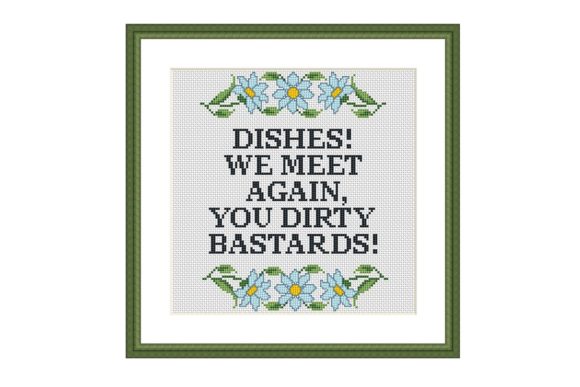
As an embroidery designer who has worked with hundreds of small businesses, from local bakeries to boutique pet brands, I have learned that the best embroidered merchandise starts with a design that balances personality with practicality. When I first looked at the Dishes Funny Kitchen Cross Stitch pattern, I immediately recognized its potential for commercial embroidery projects. The title alone—"Dishes We meet again, you dirty bastards"—carries a playful, irreverent tone that resonates with kitchen staff, home bakers, and anyone who has ever faced a sink full of dirty plates. This review is written from my perspective as a professional evaluating this cross stitch pattern for small business merch, custom apparel, embroidered patches, and branded product labels.
First Impression: Playful, Bold, and Handmade-Friendly
The Dishes Funny Kitchen Cross Stitch pattern feels like a design that was made for aprons, tote bags, and work shirts. It has a friendly, handmade character that suits small businesses that want to show their personality. The humor is clear and direct, which makes it easy to understand at a glance. For a café, bakery, or creative studio, this design can reinforce a brand identity that is casual, approachable, and unpretentious. The cross stitch style gives it a crafted, artisanal look that fits well with handmade product lines and Etsy seller branding. However, the design's rustic aesthetic means it may not be ideal for formal or luxury brands. It works best for businesses that want to communicate warmth and a sense of humor.
How the Design Performs in Real Business Use
When I consider using the Dishes Funny Kitchen Cross Stitch pattern for commercial embroidery, I evaluate several factors: stitch density, thread colors, hoop size, and how the design translates to different products. Based on the product description, the pattern is provided as a PDF file with a main embroidery image and a key. This suggests it is a cross stitch pattern, not a native machine embroidery file. For machine embroidery, you will need to convert the pattern into a digital embroidery file format like PES, DST, or EXP. This is a critical step before production. As a designer, I recommend testing the pattern in black and white first to confirm the contrast and spacing of the letters and graphics. The design's bold, humorous text should work well at medium to large sizes, but small lettering may become unclear if the stitch count is too high or the thread colors are too similar.
Embroidered Patches and Custom Apparel
For embroidered patches, the Dishes Funny Kitchen Cross Stitch pattern can be a strong candidate. The design's relatively simple shapes and text make it suitable for patch production, especially if you use a limited thread palette. I suggest using two to three contrasting thread colors to ensure the text pops against the background fabric. For custom apparel like aprons, caps, and tote bags, the design can be placed as a chest logo accent, sleeve detail, or center front mark. The playful phrase works well on apron embroidery, where it can become a conversation starter. For cap embroidery, the design may need to be scaled down to fit the curved front area. I recommend testing the design on a curved surface before committing to a full production run. The design's thick lines and simple graphics reduce the risk of distortion, but small details must be checked carefully.
Tote Bag Design and Product Packaging Accents
Tote bag design is one of the strongest applications for this pattern. The design's size can be adjusted to fit the center of a canvas tote, creating a branded product that customers will use and share. The humor adds a personal touch that can increase customer engagement and product value. For product packaging accents, such as small labels or hang tags, the design may need to be simplified further. The cross stitch pattern, with its grid-based structure, can be adapted for printing on paper or fabric labels. However, for machine embroidery on small items, you must verify that the stitch density is appropriate. High stitch density can cause fabric puckering, especially on lightweight materials. Use a proper stabilizer and conduct a test stitch on the actual fabric before production.
Where to Use This Design Carefully
Not every product or placement is ideal for the Dishes Funny Kitchen Cross Stitch pattern. Here are my recommendations as a designer:
- Small patch sizes: If the patch is smaller than 2 inches, the text may become illegible. Test at the intended size before ordering bulk patches.
- Cap fronts: Curved surfaces require flexible backing. The design's thick lines may fare better than fine details, but always test on a cap.
- Dark uniforms: If the base fabric is dark, ensure the thread colors have high contrast. White or light yellow thread on black fabric works well. Avoid dark thread on dark fabric.
- Frequent washing items: Aprons and tote bags that are washed often need durable stitching. Use a tight stitch density but not so tight that it damages the fabric. Polyester thread is more colorfast than cotton for frequent washing.
- Textured fabric: Fleece, terry cloth, or heavy knits may distort the design. Use a cutaway stabilizer for stability.
How the Design Affects Brand Identity and Customer Trust
Brand identity is built on consistency and recognition. The Dishes Funny Kitchen Cross Stitch pattern, with its humorous tone, can help a small business stand out in a crowded market. For a local bakery or café, this design reinforces a friendly, down-to-earth image that customers appreciate. It can be used on staff uniforms to create a cohesive look, or on customer merchandise to build a community around the brand. However, the design's language may not be appropriate for all audiences. If your business targets families with young children or formal corporate clients, the phrase "dirty bastards" could be off-putting. Consider the demographic and context before using the design on public-facing merchandise. When used correctly, the pattern can increase customer trust by showing that the business is authentic and not afraid to show its personality. This can lead to stronger brand loyalty and word-of-mouth marketing.
Practical Embroidery Designer Notes
Based on my experience with hundreds of embroidery projects, here are the steps I recommend before using the Dishes Funny Kitchen Cross Stitch pattern for commercial embroidery:
- Test in black and white first: Print the pattern at the intended size and check the readability of the text. Ensure that the letters are well spaced and that no lines merge together.
- Check thread color contrast: Choose thread colors that are opposite on the color wheel for maximum visibility. For example, use a bright red or yellow thread on a dark background, or a dark blue thread on a light background.
- Inspect spacing: The cross stitch pattern's grid may create gaps between letters. Adjust the spacing in your digitizing software to ensure the text is continuous and legible.
- Confirm hoop size: The design must fit within your embroidery hoop. If the pattern is too large, you may need to split it into multiple hoops or reduce the size. Measure the design area before digitizing.
- Test on real fabric: Use the exact fabric you intend for the final product. Run a test stitch to check for puckering, thread breaks, or distortion. Use a stabilizer appropriate for the fabric weight.
- Create a mockup for client approval: Use a printable mockup or a digital overlay to show the design on the actual product. This helps the client visualize the finished product and reduces the risk of revisions.
- Compare with other design assets: Ensure the Dishes Funny Kitchen Cross Stitch pattern matches the other design assets in your brand identity, such as logos, fonts, and color schemes. Consistency improves recognition.
- Confirm commercial licensing: The product description indicates a cross stitch pattern for personal use. Before using it for commercial embroidery, you must verify that the license allows commercial use. Contact the seller if necessary. Without explicit permission, you cannot legally sell embroidered products using this design.
Final Thoughts on the Dishes Funny Kitchen Cross Stitch for Business
The Dishes Funny Kitchen Cross Stitch pattern offers a strong opportunity for small businesses that want to create memorable, personality-driven merchandise. Its playful tone and handmade aesthetic suit cafés, bakeries, handmade brands, and creative studios. However, as with any design used for machine embroidery, the key to success lies in careful testing, proper digitizing, and appropriate placement. The design performs best in medium to large sizes, on flat or gently curved surfaces, and on fabrics with good contrast. Avoid using it on very small items, dark fabrics without contrast, or products that require frequent washing without durable thread. If you are a small business owner, embroidery shop, or Etsy seller, I recommend adding this design to your collection after confirming the licensing and testing it thoroughly. When executed well, the Dishes Funny Kitchen Cross Stitch can become a signature piece of your brand identity, increasing customer engagement and product value. Remember that every embroidery project is a collaboration between the design, the fabric, the thread, and the stabilizer. Take the time to test, and you will create finished products that your customers will love.
For those working with Cross Stitch Patterns and Graphics, this design is a good example of how a simple, humorous concept can be adapted for multiple applications. Whether you use it as a embroidered patch, an apron design, a tote bag mark, or a custom apparel accent, the Dishes Funny Kitchen Cross Stitch pattern has the potential to become a bestseller for your small business merchandise line. Just be sure to follow the practical steps outlined above, and you will avoid common pitfalls that can ruin an otherwise great design. Happy stitching, and may your dishes never be dirty again.